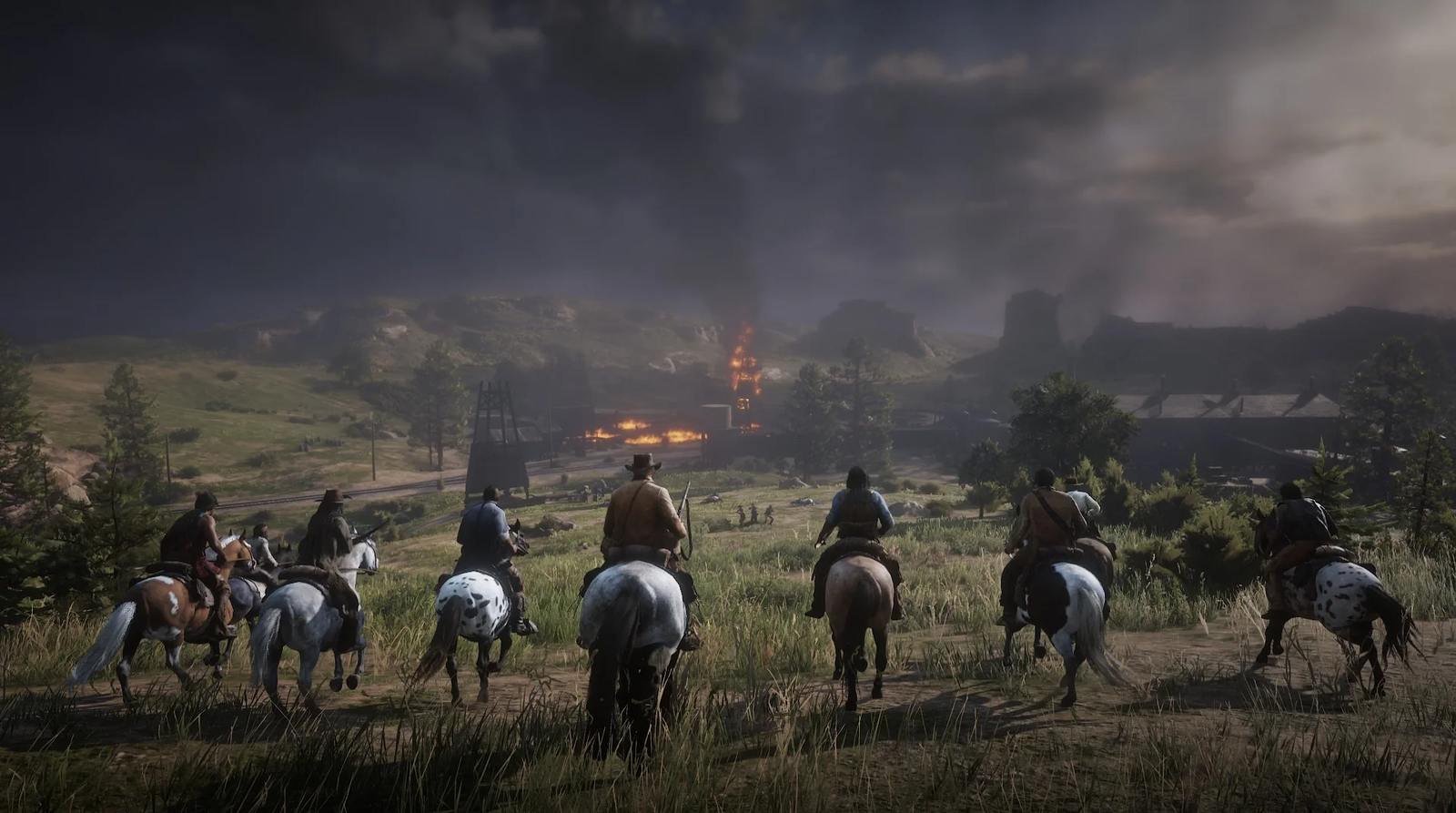
Red Dead Redemption 2 presents a vast frontier world shaped by environmental detail, layered systems, and character-driven moments. Players often notice how small interactions and subtle animations contribute to a grounded atmosphere. Rather than relying only on major story beats, the experience grows through everyday encounters, routines, and conversations that gradually make the setting feel inhabited and responsive.
Environmental Detail as a Storytelling Layer
The world design in Red Dead Redemption 2 often communicates narrative through environment rather than exposition. Landscapes shift from snowy mountains to dusty plains and crowded towns, each region carrying distinct architecture, wildlife, and ambient activity. These visual differences do more than decorate the map — they suggest economic conditions, cultural influences, and historical pressures without needing direct explanation.
Weather and time-of-day systems further deepen this environmental storytelling. Morning fog over rivers, storms rolling across open fields, and changing light conditions influence both visibility and mood. Traveling the same road at noon versus midnight can feel like a different journey. These variations encourage slower observation and make movement through the world feel less repetitive.
Small environmental touches — abandoned camps, handwritten notes, broken wagons, and hidden cabins — function like micro-stories. Players who explore off the main path often encounter scenes that hint at past events without formal quests attached. These fragments invite interpretation and curiosity, supporting immersion through discovery rather than instruction.
Everyday Actions and Physical Realism
Many immersive qualities in the game come from how ordinary actions are animated and timed. Looting, skinning animals, cooking, cleaning weapons, and setting up camp all take visible steps instead of instant completion. While this pacing may feel deliberate, it also reinforces the sense that actions have weight and process within the game world.
Character movement contributes to this grounded feel. Arthur Morgan adjusts posture when carrying heavy items, reacts to terrain slope, and navigates tight interiors with subtle animation shifts. Horses respond to terrain, fatigue, and fear in ways that affect handling. These systems connect player input with visible physical response, strengthening the sense of presence.
Survival-style meters such as health, stamina, and condition tie routine behavior to performance. Eating, resting, and maintaining gear influence effectiveness without turning the game into strict simulation. These mechanics suggest that daily habits matter, encouraging players to treat travel and preparation as part of the experience rather than filler between major missions.
Dynamic NPC Schedules and Reactions
Non-player characters in towns and settlements often follow daily routines. Shopkeepers open and close stores, workers travel between locations, and residents react differently depending on time and recent events. Observing these patterns can make locations feel structured rather than static, as if life continues whether or not the player intervenes.
NPC reactions are also sensitive to player behavior. Clothing choices, visible weapons, recent crimes, and overall honor level influence how strangers respond. A muddy, armed rider entering a quiet shop may receive cautious dialogue, while a well-dressed visitor might be greeted more warmly. These contextual responses help interactions feel situational rather than generic.
Random encounters on roads and trails extend this system beyond towns. Travelers ask for help, attempt scams, or offer information. Not every encounter leads to a quest, yet each adds social texture. Because outcomes vary, players cannot always predict results, which supports a sense of organic interaction rather than scripted repetition.
Camp Life and Group Conversations
The gang camp serves as a social hub where character interactions unfold outside mission structure. Members talk among themselves, share stories, argue, and comment on recent events. These conversations often occur without direct player prompting, rewarding those who spend time listening and observing rather than immediately leaving for the next objective.
Optional interactions within camp allow Arthur to greet, antagonize, assist, or donate resources. These choices influence tone and relationship flavor even when they do not dramatically change plot direction. The effect is subtle but cumulative, shaping how players perceive group dynamics and individual personalities over time.
Camp activities — chores, games, music, and shared meals — contribute to a sense of communal routine. They slow pacing between missions and highlight interpersonal bonds. Instead of existing only as quest dispensers, characters appear as cohabitants with habits and moods, which deepens emotional context for later story developments.
Dialogue Systems and Player Choice Tone
The dialogue interaction system offers multiple tonal approaches rather than branching narrative trees. Greeting politely, responding neutrally, or antagonizing others produces different short exchanges. While these choices rarely alter major outcomes, they color moment-to-moment experience and allow role-play within conversations.
Tone selection influences how scenes feel even when destination remains the same. A calm, respectful Arthur creates a different social atmosphere than a confrontational one. Players experimenting with tone may notice that similar encounters feel distinct based on delivery style alone. This adds expressive range without complex branching plots.
Context-aware dialogue also supports immersion. Arthur comments on weather, recent events, and surroundings during travel. Companions speak differently depending on mission progress and location. These lines reinforce continuity between gameplay and story, reducing the sense that free roam and narrative segments are disconnected modes.
Systems That Encourage Slow Observation
Several game systems appear designed to reward patience and attention. Hunting mechanics, for example, involve tracking signs, studying animal quality, and choosing appropriate weapons. Rushing often produces poorer results, while careful preparation tends to be more effective. This structure nudges players toward observation-based play.
The journal and map annotation features also support reflective engagement. Arthur sketches landmarks and records thoughts, turning exploration into documented experience. Reading entries adds personal perspective to locations and events, blending player discovery with character voice in a quiet but effective way.
Travel itself becomes part of immersion through pacing options. Riding manually across long distances exposes players to ambient dialogue, wildlife behavior, and environmental transitions. Fast travel exists but is limited enough that many journeys still unfold in real time. These stretches often host unscripted moments that strengthen world believability.
Conclusion
Red Dead Redemption 2 builds immersion through layered detail, routine interactions, and responsive character behavior. Environmental storytelling, animated everyday actions, and contextual dialogue work together to create a lived-in atmosphere. Spending time with small moments — not just major missions — often reveals the depth of its design and the richness of its social world.