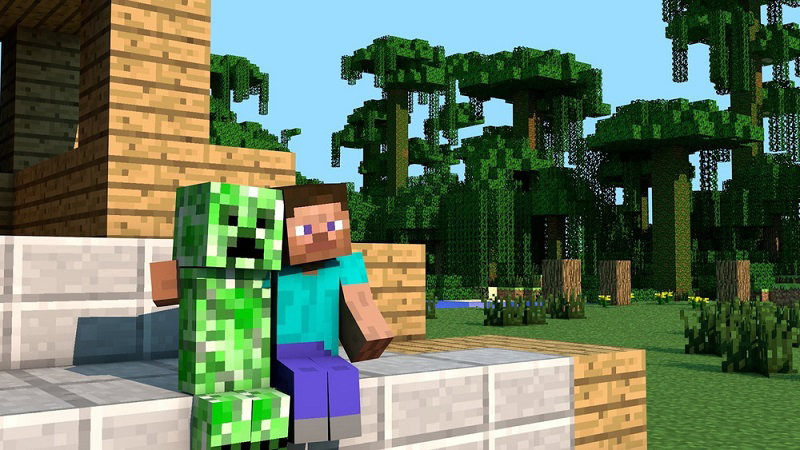
Minecraft’s Survival Mode places players in a world where progress unfolds through interaction with the environment rather than predefined objectives. From the moment the game begins, choices around gathering materials, managing time, and responding to challenges shape each experience differently. Resource availability, environmental conditions, and personal playstyle all influence how players approach survival. Observing these interactions offers insight into how resource gathering and decision-making work together to guide moment-to-moment gameplay and long-term world development.
Understanding the Role of Resources in Survival Mode
Resources form the foundation of Survival Mode, influencing how players interact with the world and plan their next steps. Basic materials such as wood, stone, and food often serve as early priorities, not because of explicit instructions, but due to their visible usefulness. Players may notice that gathering certain resources unlocks tools and structures that expand available actions, subtly shaping progression through practical necessity rather than linear direction.
As gameplay continues, resource variety increases and introduces more layered decisions. Items like iron, coal, and crops support multiple purposes, encouraging players to evaluate how and when to use them. The choice between immediate use and long-term storage becomes part of everyday gameplay. These decisions are not framed as right or wrong but instead reflect situational needs, available knowledge, and personal experimentation within the survival environment.
Early-Game Choices and Their Long-Term Influence
The early stages of Survival Mode often involve quick assessments of surroundings and available materials. Decisions such as where to gather resources, whether to build shelter immediately, or how to spend daylight hours influence the pace of early progress. Players may prioritize safety, exploration, or experimentation based on how they interpret environmental cues, leading to varied starting experiences even within similar world seeds.
These early decisions can carry subtle long-term effects. A player who focuses on early farming may experience steadier resource access later, while one who explores extensively might uncover rare materials sooner. Neither approach guarantees a specific outcome, but each shapes the flow of gameplay differently. Over time, these early patterns may influence how players respond to later challenges and opportunities within the world.
Risk, Reward, and Environmental Awareness
Survival Mode frequently presents situations where resource gathering involves balancing risk and reward. Mining deeper underground, traveling at night, or entering unfamiliar biomes can offer access to valuable materials while also introducing hazards. Players often weigh potential gains against possible losses, such as lost items or time, without explicit prompts guiding those judgments.
Environmental awareness plays a central role in these decisions. Terrain, lighting, sound cues, and mob behavior all provide information that players may interpret in their own way. Choosing when to retreat, prepare, or proceed becomes an ongoing process shaped by observation rather than fixed rules. This dynamic encourages attentiveness to surroundings and adaptability as conditions change throughout the game.
Tool Progression and Efficiency Decisions
As resources accumulate, players gain access to improved tools that alter how gathering is approached. The transition from basic wooden tools to stone, iron, and beyond introduces considerations around efficiency and durability. Players may decide whether upgrading tools immediately feels necessary or whether conserving resources better suits their current goals and environment.
Tool selection also influences how players interact with the world. Faster mining, improved combat capability, or specialized tools can open new areas for exploration or simplify existing tasks. These changes do not remove decision-making but shift its focus. Players continue to assess trade-offs between resource investment, time spent crafting, and the practical benefits gained through upgraded equipment.
Food Management and Sustainability Choices
Food serves as a recurring consideration that shapes daily decision-making in Survival Mode. Early food sources often involve quick solutions such as hunting or gathering, while longer-term options like farming require planning and patience. Players may experiment with different food strategies based on availability, biome conditions, and personal preferences.
Over time, food management can influence how freely players explore or engage with challenges. A stable food supply may reduce pressure during exploration, while scarcity can encourage cautious movement and prioritization. These choices are rarely forced and instead evolve through trial, observation, and adjustment. Food systems quietly reinforce the connection between preparation and sustained survival within the game world.
Inventory Limitations and Prioritization
Limited inventory space introduces another layer of decision-making tied to resource gathering. Players often must choose which materials to carry, which to leave behind, and which to discard during exploration. These decisions can change depending on current objectives, distance from home base, and familiarity with the terrain.
Inventory management encourages players to prioritize resources based on perceived usefulness rather than abundance alone. Items that support immediate goals may take precedence over rare materials with unclear applications. This constant evaluation fosters an awareness of value that adapts as players learn more about crafting systems, building options, and environmental needs throughout their survival journey.
Exploration Versus Consolidation of Resources
Survival Mode often presents a choice between expanding outward and consolidating existing resources. Exploration may uncover new materials, structures, or biomes, while staying close to a base allows for refinement, organization, and long-term planning. Players typically shift between these approaches depending on current needs and confidence in their preparation.
Neither exploration nor consolidation dominates the experience permanently. Instead, gameplay flows between periods of outward discovery and inward development. Resource gathering supports both approaches, offering materials for travel preparation as well as for base improvement. This balance creates a rhythm where decision-making responds to evolving circumstances rather than following a fixed progression path.
Player Learning Through Experimentation
Much of the decision-making in Survival Mode develops through experimentation rather than instruction. Players test different gathering methods, crafting combinations, and strategies, learning from outcomes over time. Successes and setbacks both contribute to understanding how systems interact within the game world.
This process allows players to shape their own relationship with resource management. Some may adopt cautious routines, while others embrace experimentation and adaptation. The absence of rigid solutions keeps decisions flexible and personal. Over time, players build confidence not from guaranteed results, but from familiarity with how their choices influence survival and progression.
Long-Term Planning and Base Development Decisions
Base development introduces a slower, more deliberate form of decision-making tied closely to resource gathering. Players may consider where to settle, how much to invest in permanent structures, and which materials feel worth saving for later use. Choices around layout, storage systems, and defensive features often reflect both practical needs and personal preferences rather than any fixed strategy.
Over time, base planning can influence how resources are gathered and stored across the world. A well-organized base may encourage efficient collection and crafting routines, while a minimal setup can support frequent exploration. These approaches evolve as players gain familiarity with the environment and available materials, highlighting how long-term planning emerges gradually through experience rather than immediate necessity.
Conclusion
Resource gathering and decision-making in Minecraft’s Survival Mode work together to create an experience shaped by observation, choice, and adaptation. Rather than directing players toward specific outcomes, the game provides systems that respond to how resources are collected and used. Through experimentation, prioritization, and environmental awareness, players navigate survival in ways that reflect individual approaches, making each journey through the world distinct and continuously evolving.