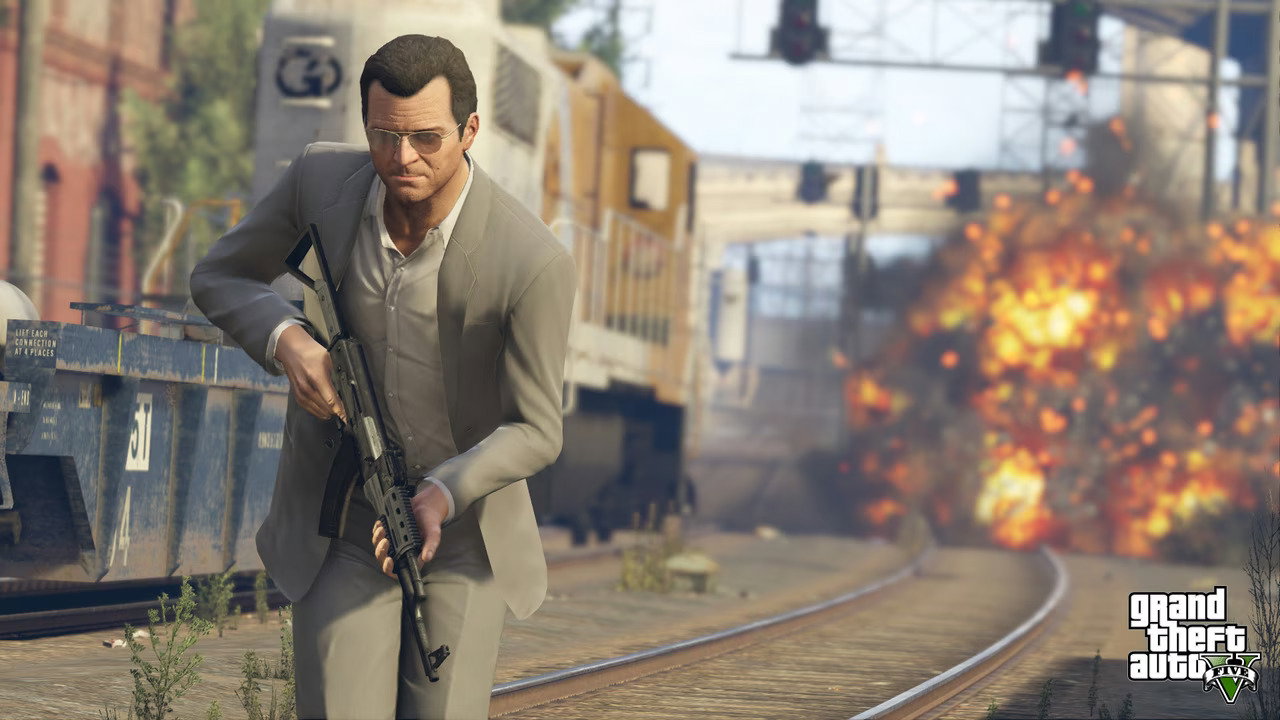
Grand Theft Auto V offers a large, layered world where story-driven missions exist alongside countless optional activities. Players can move between focused objectives and free exploration at their own pace. Understanding how these two styles of play complement each other can make the overall experience feel more cohesive, varied, and personally rewarding without forcing a single “correct” way to play.
Understanding the Role of Structured Missions
Structured missions in GTA V function as guided sequences that move the narrative forward while introducing mechanics in a controlled way. These missions usually provide clear goals, scripted events, and designed challenges that highlight character abilities, driving skills, and combat systems. For many players, missions act as anchors, giving direction inside a world that is otherwise intentionally open and unpredictable.
These missions also tend to showcase the three-character switching system in meaningful ways. Certain story jobs are built around coordinated actions between Michael, Franklin, and Trevor, encouraging players to observe how different playstyles intersect. Instead of simply offering variety, these sequences demonstrate how mission structure can create tension, pacing, and cinematic flow that free roaming alone might not naturally produce.
At the same time, structured missions often unlock new tools, areas, and opportunities. Safehouses, contacts, weapons, and side activities frequently become available after specific story milestones. Because of this, progressing through missions does more than advance plot — it gradually expands the sandbox itself. Players who balance mission progress with exploration often notice that each return to free roam includes new options and encounters.
The Freedom and Depth of Open-Ended Activities
Outside the main storyline, GTA V presents a wide range of open-ended activities that allow players to shape their own experience. These include street races, random encounters, property management, stunt jumps, side jobs, and spontaneous world events. Instead of strict objectives, these activities encourage experimentation and curiosity, rewarding players who wander off the expected path.
Open-world activities also tend to support slower, more observational play. Players can explore neighborhoods, discover hidden locations, or simply interact with systems like the stock market, vehicle customization, and character skills. This less structured engagement can act as a counterbalance to mission intensity, offering breathing room between high-stakes story segments.
Another aspect of open-ended play is emergent gameplay — moments that arise from system interactions rather than scripted design. A police chase triggered by a small mistake might turn into a multi-district pursuit. A random NPC event could lead to an unexpected firefight or reward. These unscripted sequences often become memorable precisely because they are not planned, showing how open systems contribute to personal storytelling within the larger game world.
How Mission Design Encourages Exploration
Although missions are structured, many are placed and designed in ways that gently push players toward exploration. Travel requirements, preparation steps, and optional setup tasks frequently lead players across the map. During these transitions, players naturally encounter side activities, shops, and distractions that broaden their engagement beyond the mission marker.
Heist preparation is one example of this blended design approach. Setup missions may involve scouting locations, acquiring vehicles, or gathering equipment, each offering multiple methods or optional enhancements. Players can choose how much preparation they want to invest, which indirectly connects open-world activity with structured mission outcomes without making it feel mandatory.
Mission scoring systems and optional objectives also add replay value that connects back to free roam. Trying for better completion ratings might require improved driving routes, better gear, or refined skills, all of which can be developed outside missions. This loop — play mission, explore world, return better prepared — creates a natural rhythm between structure and freedom.
Creating Your Own Play Rhythm
Because GTA V does not force a strict pacing model, players can build a personal rhythm between missions and open-world play. Some prefer to complete several story missions in sequence, treating the game almost like a cinematic campaign. Others alternate every mission with extended exploration, using side content as a cooldown period between high-pressure objectives.
Spacing missions apart can change how the story feels. Taking time to explore between major plot points allows events to “settle” and characters to feel more grounded in the world. Switching characters during free roam, investing in their skills, and customizing their vehicles can make later missions feel more connected to prior player choices, even when the mission itself is scripted.
There is also value in using open-world time to experiment without risk. Testing weapons, vehicles, flying skills, or stealth approaches outside missions can build familiarity with systems. When returning to structured objectives, this informal practice often translates into smoother execution. The game does not explicitly require this preparation, but it naturally supports it.
Avoiding Open-World Overload
With so many activities available, some players may experience choice overload — a feeling of being pulled in too many directions at once. One practical approach is to loosely categorize activities into short, medium, and long sessions. A quick stunt jump or shop visit might fit between missions, while property investments or collectible hunts can be reserved for longer play sessions.
Map icons and contact messages can also be treated as suggestions rather than obligations. Not every activity needs to be completed immediately when it appears. Letting opportunities sit for a while can reduce pressure and keep the experience from turning into a checklist. GTA V’s world generally remains responsive even when content is approached out of order.
Rotating activity types can help maintain freshness. After several combat-heavy missions, a driving challenge or exploration session may feel refreshing. After long periods of free roam, a story mission can restore focus and narrative momentum. Viewing content as interchangeable rather than hierarchical supports a more relaxed and sustainable playstyle.
Character Switching as a Bridge Between Styles
The character-switching system plays a subtle role in balancing structured and open-ended play. Each protagonist has different strengths, special abilities, and narrative contexts. Switching between them during free roam often reveals new activities, locations, and side stories, making exploration feel layered rather than repetitive.
Structured missions sometimes require switching at key moments, but practicing this mechanic outside missions can make those transitions feel more natural. Observing where each character appears in the world — and what they are doing — adds texture to the sandbox. These small moments can connect free-roam curiosity with story-driven characterization.
Using different characters for different activity types can also create informal specialization. A player might prefer one character for races, another for combat practice, and another for exploration flights. This self-assigned role pattern is not required by the game, yet it can make both missions and open-world activities feel more integrated and purposeful.
Letting Systems Interact Naturally
One of GTA V’s strengths is how its systems — law enforcement, economy, traffic, NPC behavior, and environmental design — interact across both missions and free roam. Missions may spotlight these systems under controlled conditions, while open-world play lets them interact more freely. Paying attention to these overlaps can make transitions between the two modes feel smoother.
For example, driving skills developed during casual city exploration often translate directly into mission escapes. Knowledge of alleyways, highways, and shortcuts gained during free roam can be reused in structured objectives. Similarly, familiarity with weapon handling from optional encounters can support more confident mission play.
Rather than treating missions and open-world activities as separate modes, it can help to view them as two lenses on the same simulation. Missions frame the systems with intent and pacing, while open-ended play exposes their flexibility. Moving back and forth between these lenses tends to reveal more depth than focusing exclusively on one side.
Conclusion
GTA V supports multiple valid ways to progress, and its design does not insist on a single balance between structure and freedom. Some players may finish the main storyline quickly and then turn to world activities. Others may spend dozens of hours exploring before major plot advancement. Both approaches can produce a coherent and satisfying experience. In the end, the interaction between structured missions and open-ended activities is less about optimization and more about engagement. By alternating focus, experimenting with pacing, and allowing curiosity to guide detours, players can shape a version of Los Santos that feels personally meaningful while still grounded in the game’s narrative framework.