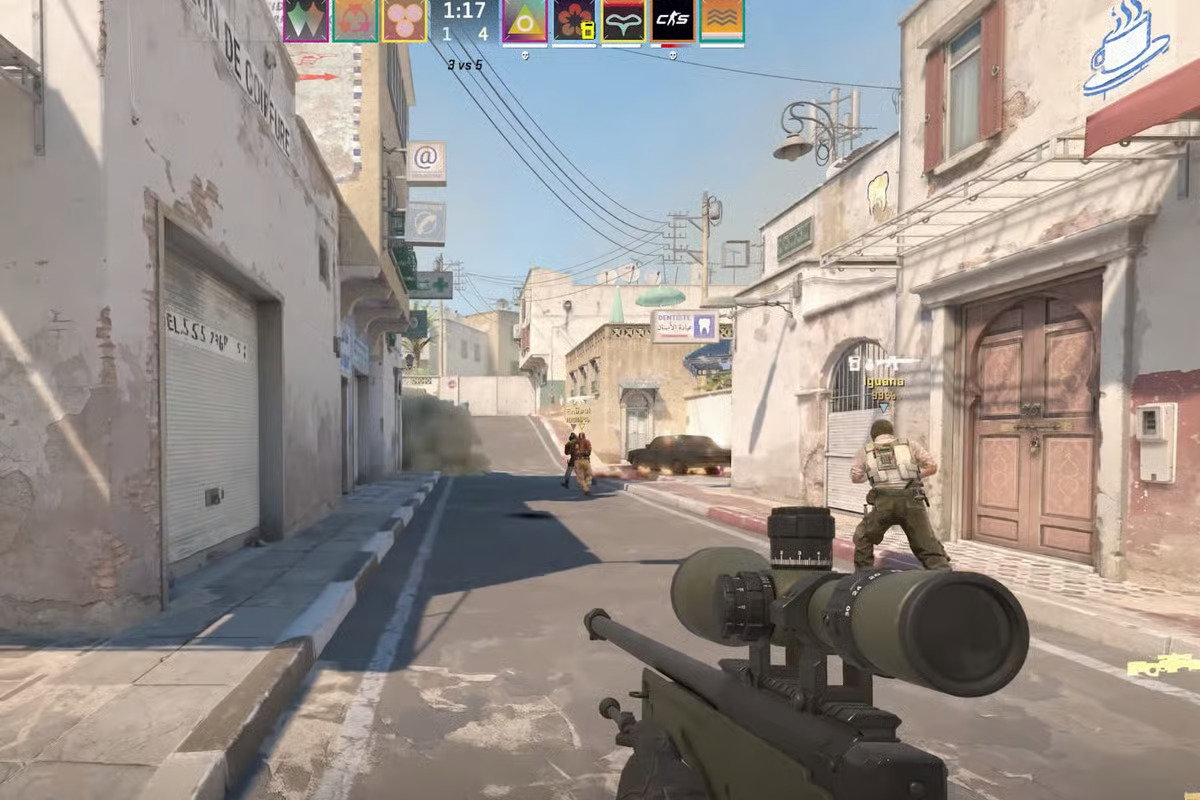
Counter-Strike matches often look fast and aim-driven on the surface, yet much of the deeper strategy unfolds through utility usage. Grenades, flashes, smokes, and molotovs shape movement, timing, and decision-making across each round. Players who explore how utility influences space and behavior often find new tactical layers that make each match feel more dynamic and thoughtfully contested.
Utility as a Tool for Shaping the Map
Utility in Counter-Strike can be viewed as a temporary map editor. A well-placed smoke changes sightlines, a molotov blocks a path, and a flash alters who can safely peek. Instead of the map being fixed, utility lets teams reshape key areas for a few seconds at a time. Those short windows often become the foundation for larger plays.
This idea turns grenades into more than supportive tools. A smoke at a choke point can function like a door that opens and closes on command. A molotov can act like a “do not enter” sign that forces rerouting. Even a simple HE grenade can soften defenders enough to make a push more viable. Each piece of utility changes how safe or dangerous a position feels.
Thinking in terms of space control adds a layer of fun experimentation. Players start asking questions like: what happens if this angle disappears for five seconds? What if this defender must move right now? These questions encourage creative throws and coordinated timing. Over time, utility becomes a way to paint new tactical shapes onto familiar maps.
Flashbangs and the Art of Timing Windows
Flashbangs are often associated with aggressive entries, but their deeper value lies in creating timing windows. A good flash does not just blind opponents — it briefly shifts who has the right to act first. That shift might last only a moment, yet that moment can allow a team to cross, peek, or plant with reduced risk.
There is also variety in how flashes are delivered. Pop flashes explode quickly around corners, while high-arc flashes bloom overhead and affect wider zones. Some are thrown for teammates, others are self-thrown for solo plays. Each style creates a slightly different timing pattern, which keeps their use flexible rather than formulaic.
From a viewer or player perspective, flashes add drama and rhythm. A tense standoff can instantly convert into action after a bright burst and a coordinated swing. Because not every flash lands perfectly, there is always uncertainty involved. That uncertainty keeps engagements lively and rewards teams that coordinate movement with their utility instead of treating it as an afterthought.
Smokes as Information and Misdirection
Smokes are commonly used to block vision, yet they also influence how information flows. When a smoke appears, defenders often assume presence. That assumption may be correct — or it may be a fake. Either way, reactions are triggered. Rotations start, positions adjust, and attention shifts, sometimes before the real attack begins.
Creative teams sometimes use smokes to suggest plans they do not intend to finish. A smoke at one bombsite can pull defenders away from another. Even if experienced opponents remain cautious, the possibility alone introduces hesitation. That hesitation can slow rotations just enough to create a more manageable fight elsewhere on the map.
Smokes also produce interesting micro-decisions inside their clouds. Do players push through? Wait behind? Spam shots? Each choice carries risk. These smoky standoffs are often tense and unpredictable, adding a playful mind-game layer where both sides guess intentions. The result is not just blocked vision, but a short-lived psychological puzzle.
Molotovs and Incendiaries as Movement Controls
Molotovs and incendiary grenades are area-denial tools that directly influence movement. Fire forces players to reposition or take damage, which makes it useful for clearing corners and delaying pushes. Instead of checking every angle with crosshair placement alone, players can sometimes use fire to make hidden positions uncomfortable to hold.
These grenades also help shape round pacing. A molotov at a choke point can delay an attack long enough for reinforcements to rotate. On offense, fire can push defenders out of strong anchor spots before an entry attempt. In both cases, the flame acts like a short timer that both teams must respect and play around.
There is a tactical satisfaction in combining fire with other utility. A molotov followed by a flash can catch a relocating defender mid-movement. A smoke placed next to fire can create confusing visibility edges. These layered effects reward planning and teamwork, and they often produce memorable moments where positioning battles feel almost puzzle-like.
Economy Choices and Utility Investment
Utility usage is closely tied to the in-game economy. Players rarely have unlimited grenades, so each purchase becomes a small strategic choice. Should the team prioritize rifles and armor, or sacrifice a bit of firepower for a full set of grenades? Different teams answer differently depending on scoreline, side, and playstyle.
Full-utility rounds often feel more structured because teams can execute layered strategies. Low-utility rounds, by contrast, tend to be scrappier and more aim-dependent. Neither style is automatically better in every situation, which keeps decisions interesting. Teams frequently adjust their buy priorities based on what they expect the opponent to do.
There is also a fun risk-reward element in partial buys with targeted utility. A single well-used smoke or flash can enable a surprise plant or site take even with weaker weapons. These moments highlight how smart grenade usage can stretch limited resources. It adds variety to rounds that might otherwise feel predictable.
Coordination, Practice, and Creative Setups
While individual grenade skill matters, coordinated utility often produces the most noticeable strategic openings. Teams that practice lineups and timing can layer smokes, flashes, and molotovs in quick sequences. To opponents, these executes can feel like the map suddenly transformed all at once, compressing reaction time.
Practice servers and custom maps have made grenade experimentation more accessible. Players can test trajectories, learn bounce behavior, and invent new setups. This sandbox-like preparation phase adds a creative dimension outside competitive matches. Discovering a new lineup or timing trick can feel like unlocking a new tactical shortcut.
At the same time, not every useful grenade needs to be complex. Simple, reliable throws used at the right moment often outperform fancy lineups used at the wrong time. Mixing practiced setups with adaptive, in-the-moment utility keeps gameplay flexible. That blend of preparation and improvisation is part of what keeps matches fresh and enjoyable.
Reading and Countering Opponent Utility
Utility strategy is not only about throwing grenades but also about interpreting them. The type, timing, and location of enemy utility can reveal intentions. An early defensive molotov might suggest a delay-focused setup. Multiple smokes in one area might hint at an execute — or a fake designed to draw rotations.
Counter-utility adds another interactive layer. Players can flash through smokes, extinguish molotovs with their own smokes, or reposition after being forced out. These responses turn grenade usage into a conversation between teams rather than a one-sided action. Each side reacts and adapts within seconds.
From a spectator standpoint, these exchanges are often exciting because they show planning colliding with adaptation. A perfectly designed execute can be slowed by smart counter-utility. An early defensive setup can be bypassed with unexpected timing. This back-and-forth keeps rounds from feeling scripted and supports a playful, tactical tug-of-war.
Conclusion
Utility in Counter-Strike acts as a flexible toolkit for shaping space, timing, and opponent behavior. Smokes, flashes, and fire grenades open short-lived opportunities that teams can explore in creative ways. Treating utility as a strategic playground rather than spare equipment often makes rounds more dynamic, interactive, and enjoyable for both players and spectators.