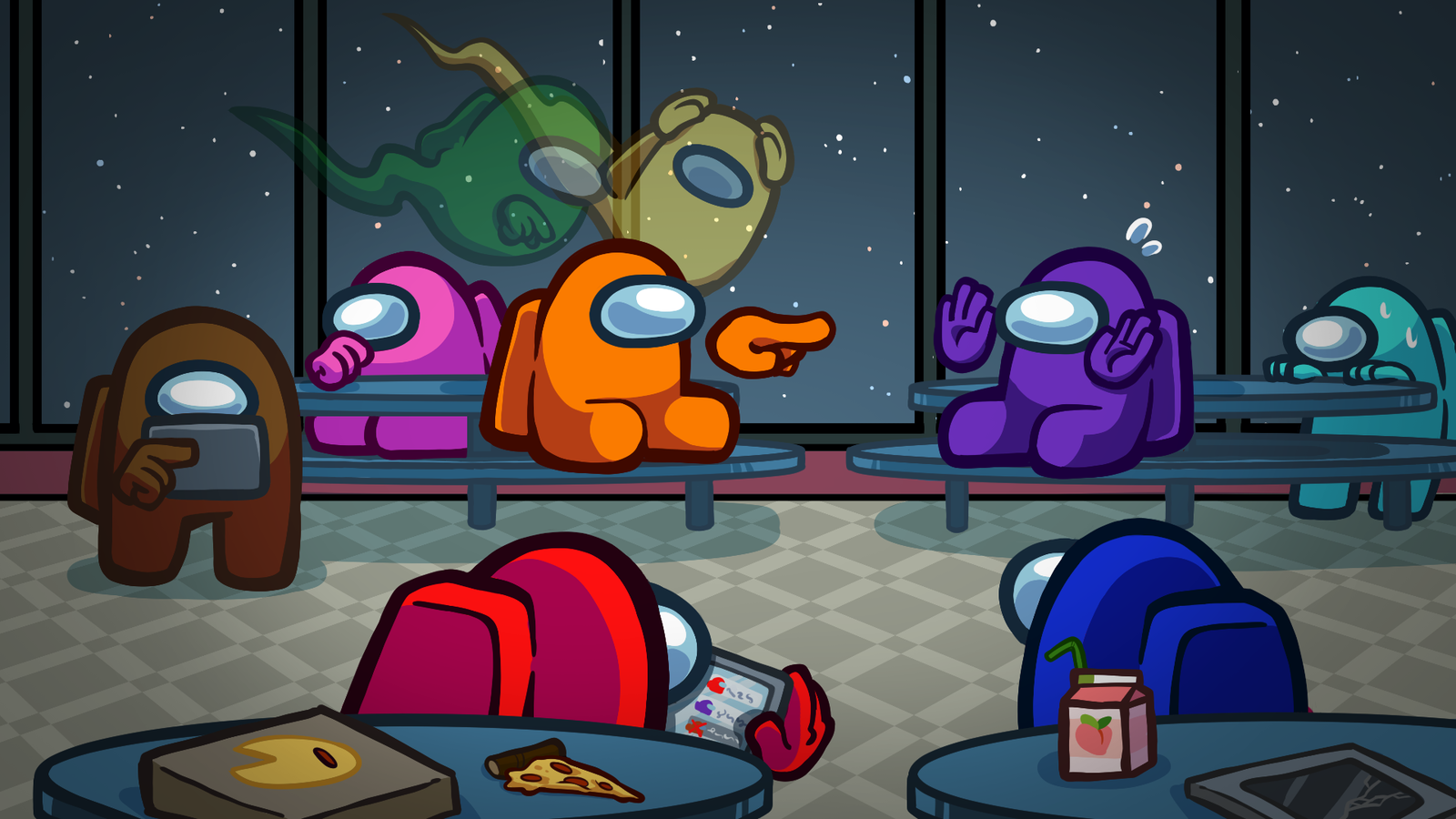
Among Us places players in a setting where information is incomplete, trust is fragile, and decisions carry social consequences. Each round becomes a small experiment in observation and persuasion. Instead of relying on reflexes alone, players read behavior, timing, and communication patterns. The result is a play experience shaped as much by interpretation and discussion as by in-game movement and tasks.
Reading Behavior Instead of Game Stats
Among Us does not provide detailed performance statistics during a match, so players often rely on behavioral cues rather than numerical data. Movement patterns, hesitation near tasks, unusual route choices, and timing around sabotages become informal signals. None of these automatically confirm guilt or innocence, yet they form the raw material players use to build their suspicions and defenses during meetings.
Because these cues are ambiguous, interpretation varies widely between groups. One player might see hesitation as proof of deception, while another might view it as simple uncertainty or map confusion. The same behavior can be read in opposite ways depending on prior rounds and social familiarity. This variability keeps discussions active and prevents deduction from becoming purely mechanical.
The lack of hard data encourages attention to context. Players often combine small details — who entered a room, who left quickly, who reported — into a narrative explanation. These narratives are not guaranteed to be correct, but they help structure group reasoning. Over time, players learn which behavioral clues are more reliable in their regular play groups and which tend to mislead.
The Psychology of Suspicion and Trust
Social deduction games often highlight how quickly trust can shift under pressure. In Among Us, a helpful player in one round can become the prime suspect in the next based on a single coincidence. Because roles are hidden, players evaluate each other through evolving impressions rather than stable reputations, which keeps social dynamics fluid and sometimes unpredictable.
Suspicion often grows from pattern recognition. If someone repeatedly appears near incidents, speaks defensively, or avoids group movement, others may begin to connect those events into a theory. Even when each individual moment has an innocent explanation, the pattern itself can feel persuasive. Players frequently weigh pattern consistency more heavily than isolated facts.
Trust, meanwhile, is often built through verifiable actions. Visual tasks (when enabled), confirmed alibis, and consistent reporting habits can create temporary alliances. These alliances are rarely permanent, but they influence voting behavior and discussion tone. The interplay between suspicion and trust creates a social layer where persuasion and credibility matter as much as map awareness.
Communication as a Gameplay Mechanism
Discussion phases in Among Us function almost like mini debates. Players present timelines, challenge inconsistencies, and defend their choices using limited shared evidence. Communication style — calm, assertive, hesitant, detailed — can influence how statements are received, even when the factual content is similar. Delivery sometimes shapes perception as strongly as logic.
Short, structured statements often carry weight because they are easy for groups to process quickly. Long explanations may appear thorough to some listeners but suspicious to others. Players gradually learn to tailor how they speak: offering enough detail to sound credible without overwhelming the group. This adjustment becomes part of skill development within regular play circles.
Silence is also interpreted. A quiet player might be seen as hiding something, staying cautious, or simply struggling to find words. Different groups attach different meanings to low participation. Because the game does not clarify intent, players fill the gaps with assumptions. These assumptions, right or wrong, influence votes and shape the evolving story of each round.
Working with Incomplete and Noisy Evidence
Evidence in Among Us is often partial and noisy. A player might witness someone near a location but not see the full sequence of events. Door closures, sabotages, and overlapping routes create uncertainty. Players rarely operate with perfect timelines, so they estimate, approximate, and sometimes misremember — all of which affect conclusions.
This uncertainty encourages probabilistic thinking rather than absolute certainty. Players may vote based on likelihood instead of proof, especially late in the game. Phrases like “most likely,” “leaning toward,” or “safer vote” reflect this mindset. Decisions become risk management exercises where groups choose the option that seems least dangerous given limited knowledge.
Conflicting testimonies add another layer of complexity. When two players accuse each other with equal confidence, the group must evaluate secondary factors: past reliability, task visibility, travel plausibility, and social tone. These tie-breakers are subjective, yet they help groups move forward. The process shows how people often resolve uncertainty through combined small signals rather than decisive evidence.
Deception Techniques and Defensive Play
For impostor-role players, success often depends on managing perception rather than avoiding all suspicion. Blending into group routines, mirroring common paths, and contributing believable observations can reduce attention. Instead of acting perfectly, appearing normally imperfect sometimes feels more convincing within casual lobbies where flawless behavior may look staged.
Defensive play also involves controlled risk. Overly aggressive accusations can backfire if unsupported, yet complete passivity may raise doubts. Some players choose to plant early seeds of uncertainty, while others wait and respond reactively. These styles influence how discussions unfold and how long suspicion takes to form around them.
Crew-role players also use defensive strategies. Sharing routes early, pairing with others, and announcing task intentions can create informal verification chains. These methods do not guarantee safety, but they increase the amount of shared context available during meetings. Defensive transparency becomes one way to counter deception without needing full information.
Group Dynamics and Voting Behavior
Voting in Among Us is not purely logical; it is shaped by group dynamics. Early speakers often frame the discussion, influencing how later information is interpreted. Confident voices may guide uncertain players, while divided groups may split votes even when evidence points in one direction. Order and tone of participation can matter as much as content.
Majority momentum is another common effect. Once several players lean toward a suspect, others may follow to avoid indecision or timeouts. This can produce quick consensus, but it can also lead to mistaken eliminations when early assumptions are flawed. Groups sometimes develop habits — cautious voting, skip-first-round norms, or strict evidence rules — to manage this risk.
Repeated play with the same group often changes dynamics. Players learn each other’s habits, tells, and rhetorical styles, which refines interpretation but also introduces meta-reading. Someone might be suspected not because of in-round behavior but because “they usually play this way when guilty.” These meta layers add depth while keeping outcomes uncertain.
Conclusion
Among Us turns limited information into a social puzzle shaped by observation, communication, and interpretation. Players piece together meaning from behavior, timing, and conversation rather than clear metrics. Each round becomes a collaborative reasoning exercise mixed with bluffing and doubt. Approaching discussions thoughtfully and staying open to multiple explanations often keeps the experience engaging and socially rich.